Please fill in this field correctly

Bay window structures
Bay windows: types of structures, reinforcement strength, joint insulation, and professional installation.
Bay windows expand the usable area of a room and provide maximum natural light. From an engineering perspective, such a projection beyond the facade line is a complex structure that requires much more precise calculations than a regular window. The main technical feature lies in the combination of several frames at angles, which creates non-standard loads on the structure. That is why European profile systems used in the design and installation of bay windows require a professional approach at every stage—from technical sketches to final protection of joints from moisture and heat loss.
What is a bay window and what types of constructions are there?
In architectural terminology, a bay window is a part of the internal space of a building that protrudes beyond the facade line and has its own glazing. Simply put, it is a "lantern" or projection that allows you to see the street not in one plane, but panoramically. Typically, this is a group of window units connected to each other through specialized transition profiles. In engineering practice, several key configurations are identified, each with its individual characteristics.
Classification by geometric shape
- Classic multi-faceted bay window. It involves the connection of segments at clearly defined angles (usually 90 or 135 degrees). This is the most stable structure because for such angles there are ready-made factory connectors that ensure a tight fit.
- Arbitrary angular bay window. Modern architectural trends often require non-standard solutions where the angles can be anything. The implementation of such projects is possible only with the help of a "bay window pipe" - a special round profile around which windows can be unfolded at the desired angle, like doors on hinges.
- Semicircular (radius) solutions. These are the most complex for plastic windows. They require either the use of curved profiles, which limits the possibilities of internal reinforcement with metal, or segmentation into a large number of narrow blocks to visually create the effect of an arc.
- Combined facade systems. This is the integration of bay windows with balcony doors or large sliding systems (HST). Such solutions require separate calculations for static deflection—this is when heavy glass begins to press on the frame so much under its weight that it deforms.
Angular constructions remain the most in demand in the markets of Spain and Europe due to their high reliability and better rigidity indicators.
Main technical features of bay windows
The main difference between a bay window system and a standard one is the presence of profile connection nodes outside of one plane. While a regular window simply stands in the wall, a bay window creates its own "wall" of glass. Here, torsional moments arise—these are forces that try to twist or shake the vertical posts under wind pressure.
In practice, the reliability of such a system is based on three components:
- Bay connectors (adapters). These are the "spine" of the entire system. They connect two separate frames into one monolithic structure.
- Internal static reinforcements. Plastic is soft on its own. To hold the weight of heavy glass, there must be a steel core (reinforcement) with a wall thickness of at least 3 mm inside the connector. This is like an iron frame inside reinforced concrete.
- Sealing system. The use of special seals that prevent air and moisture from penetrating inside the joint. Without this, the bay window will start to "cry" (condense moisture) at the first cold snap.
Each such connection becomes a potential cold bridge (a place where heat leaves the house faster) if the engineer makes a mistake in choosing the parts.
Rigidity of the structure and the role of reinforcement
The bay window system works as a single spatial frame. Imagine a house of cards: if one card tilts, everything falls. The same applies here: any micro-shift of one window affects the entire system. Because bay windows protrude beyond the facade, they are the first to take the wind hit. Standard thin metal (1.5 mm), which is used in regular windows, is categorically insufficient here.
Engineering approach to reinforcement
- Reinforced metal reinforcement. We use thick steel (up to 5 mm). This guarantees that the window will not change its shape even under the scorching Spanish sun, which heats plastic significantly.
- Static posts. In certain cases, we add external reinforcements—these are metal plates that are attached over the joint. They work like ribs of rigidity on an airplane.
- Support pads. The weight of the glass in the bay window can reach 400 kg per meter. To ensure that this weight does not crush the lower frame, we use special support blocks that transfer all the load directly to the concrete foundation of the house.

Tightness and Thermal Insulation to Combat Cold Bridges
The energy efficiency of a bay window is not only about glass but also about seams. In a regular window, the seams are closed off by the wall, while in a bay window, they are exposed to all winds. The key issue is vertical connectors. If they are hollow inside, they become a "hole" in the thermal protection of the house.
To ensure comfort, we implement the following solutions:
- Wide profiles (from 70 mm). The wider the profile, the more air chambers it contains, which act like a thermos.
- Energy-saving glass. We use glass with "soft coating" (Low-E), which acts like a mirror for heat: in winter, it reflects heat back into the room, and in summer, it prevents heat from entering.
- Insulation of the "pipe". Professional installation involves filling the internal space of the bay connector with a special insulation material. This eliminates the appearance of condensation - points where warm air meets cold metal and turns into water.
If this is not done, there will always be a puddle of water on the bay window sill, and black mold will appear on the seams.
Installation Protocol for Bay Windows
Installing a bay window is like assembling a complex constructor, where the parts weigh hundreds of kilograms. An error of 1 mm at the beginning leads to the last window simply not fitting into the opening. The professional team at Veneda works according to a strict algorithm:
- Laser verification. We do not trust tape measures; we check levels with a laser to understand the actual curvature of the walls and floor.
- Sealing of joints (RAL installation). We do not just foam the windows. We use special tapes that protect the foam from moisture from outside and vapor from inside. This makes the seam eternal.
- Mechanical bonding. The frames are not just pressed against each other; they are screwed together through the metal connector. This creates a monolithic frame.
- Multi-layer seam. We create a "sandwich" of insulating materials so that no draft has a chance to enter the house.
Any mistake at this stage will come back to haunt you within a year when the windows start to creak or close poorly.
Practical and Economic Advantages of Bay Windows in Private Homes
Although a bay window costs more, it brings the owner real profit in the form of comfort and property value.
- Additional meters. You get usable space that doesn’t need to be added with bricks. It’s a bright nook where it’s nice to place a table or chair.
- Light comfort. A bay window gathers light from three sides. This means your room will be illuminated from early morning until late evening without turning on lamps.
- Prestigious look. A house with a bay window looks like an expensive architectural object. Its market price is always higher than a standard "box" with flat windows.
Specifics of Heat Protection and Salt in the Climate of Spain
In Spain, there are regions where the main enemy of windows is not frost but the sun and salt. The sun expands plastic, and salt "eats away" the metal of the fittings (opening mechanisms).
We recommend special solutions:
- Guardian Sun glass. This is smart glass that cuts off solar heat but lets in light. There will be no "greenhouse" effect in your bay window.
- Anodized fittings. They have a special coating that is not afraid of salty sea air. Your windows will open easily even after 10 years of living by the sea.
- Stabilized PVC. We use profiles that do not yellow and do not become brittle under ultraviolet light.
Common Mistakes and a Checklist for the Client
To avoid paying twice, check the installers' work against these points:
- Sound of the connection. Tap on the plastic post between the windows. The sound should be dull and solid. This means there is steel inside. If the sound is ringing, it is hollow, and the structure is dangerous.
- Absence of gaps. Look at the joints. There should be no visible mounting foam or "bare" plastic. Everything should be sealed with gaskets or covers.
- Ease of operation. Even the heaviest sash of a bay window should open with one finger. If you have to apply force, the window is installed crookedly.
- Water drainage. Check if the sills (metal window sills on the outside) are installed. They should be one piece so that water does not flow under the window.
Bay window constructions are the highest level of glazing. They provide space and light but require mathematical calculation and professional hands. The main secret of a bay window's reliability is not the beauty of the profile but the strength of the internal metal and the quality of the seam sealing.
A well-designed bay window is an investment in your comfort that pays off every time you look at the panorama outside the window. Trust such complex nodes only to those who understand the physics of their operation, not just someone who can use a screwdriver.


FAQ: Frequently Asked Questions and Answers
What is the lifespan of a bay window?
A quality PVC bay window lasts 40-50 years. The main thing is to lubricate the hardware once a year and check the condition of the rubber seals.
Can a bay window be made in an already built house?
Yes, if there is a projection in the wall. But if you want to "extend" the window beyond the flat wall, this requires reinforcing the floor slab and obtaining a renovation permit.
Are such windows safe for children? Absolutely. We recommend installing "child locks" and triplex glass, which cannot be shattered by accidental impact.
Are there aluminum bay windows?
Yes, and they are even more reliable for large panoramic projects, although they cost more than plastic counterparts. Aluminum allows for thinner posts between the windows.
Why is a bay window more expensive than a regular window?
The price is higher due to the cost of complex connecting profiles, a large amount of reinforcing metal, and the complexity of installation work that requires higher qualifications from craftsmen.

We will consult and provide a clear cost estimate
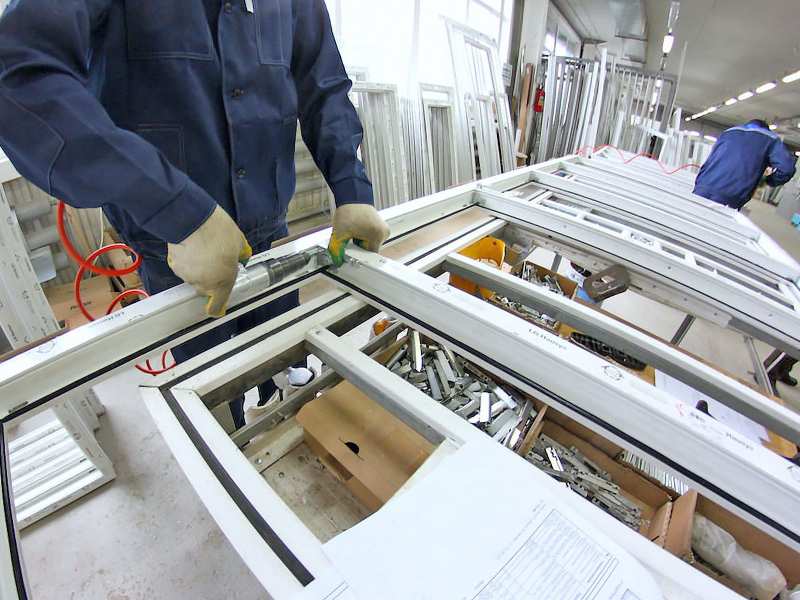
We will gather and complete
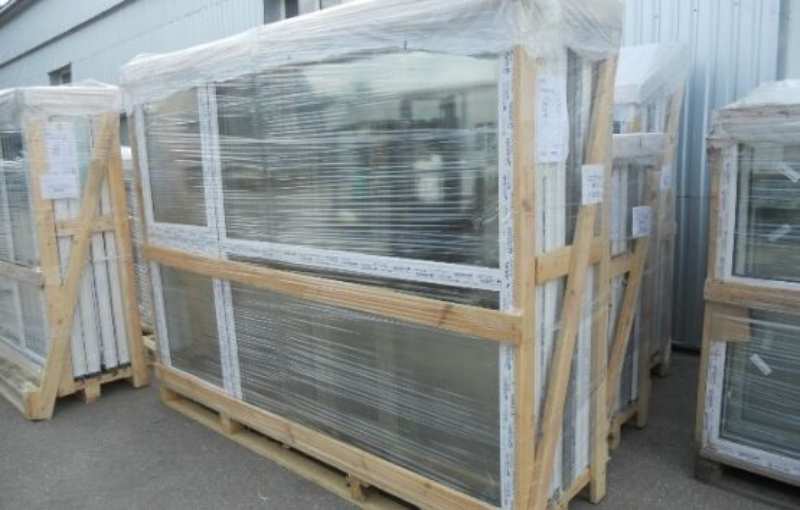
We will deliver intact and with a guarantee
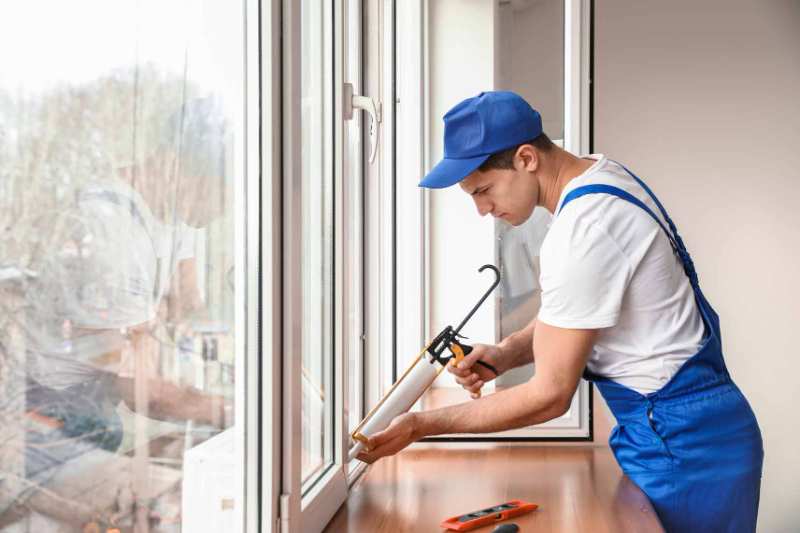
We will install windows and clean up after ourselves
Do you have questions?
Leave your contact details
We will contact you shortly, provide all the necessary information about the products, and make a cost calculation.
+34
- Spain (España)+34
- France (La France)+33
- Italy (Italia)+39
- United Kingdom+44
- Ukraine (Україна)+34
- Belgium (België)+32
- Switzerland (Schweiz/Suisse)+41
- Germany (Deutschland)+49
- Netherlands (Nederland)+31
Please fill in this field correctly
Our Contacts
Spain
Call us now
Write to us